
Vi-Nonsense
Wine's Marketing Slanguage

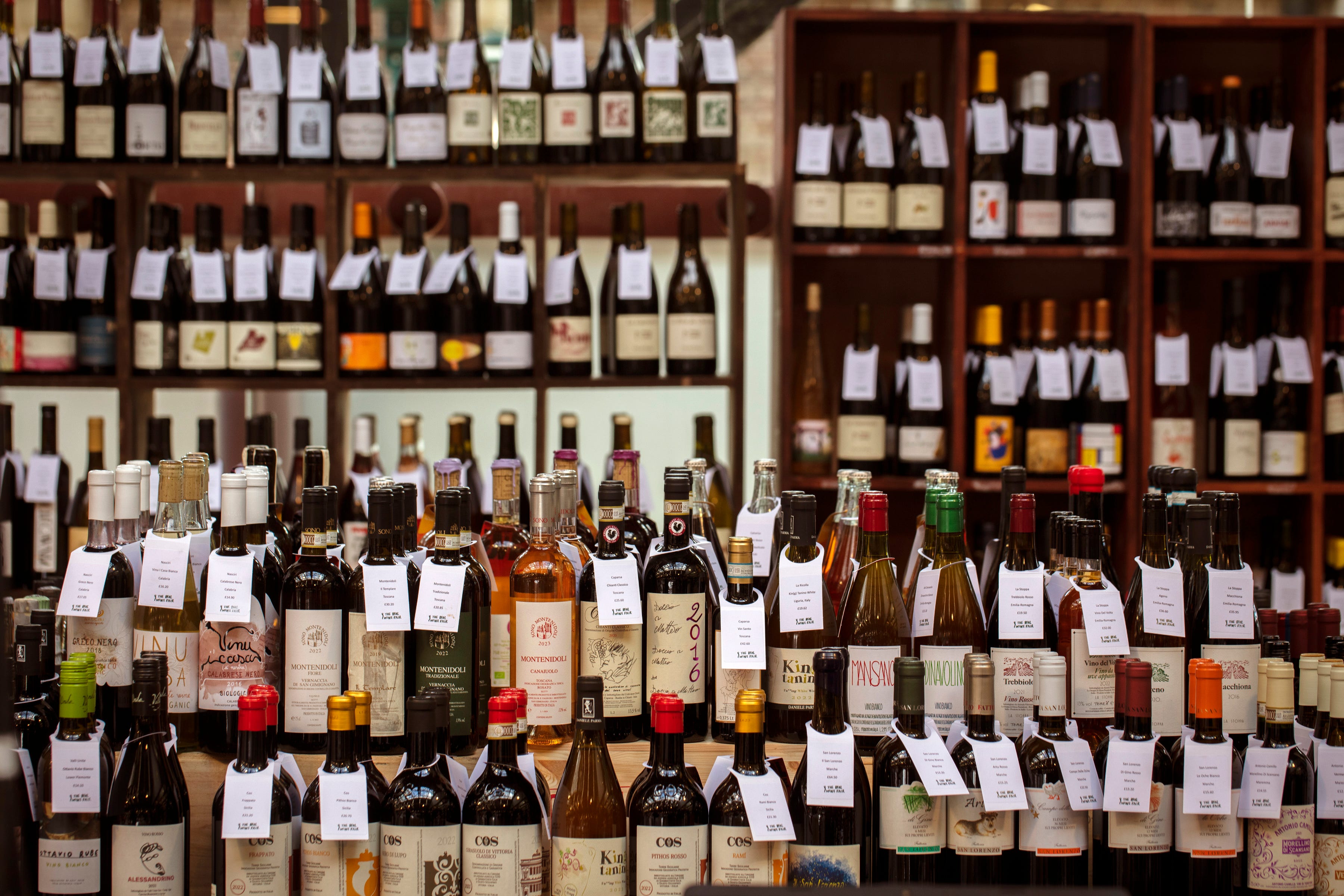
We are a society strangling in unnecessary words, circular constructions, pompous frills and meaningless jargon. ~ William Zinsser
Ours is the age of substitutes: instead of language, we have jargon: instead of principles, slogans: and, instead of genuine ideas, bright ideas. ~ Eric Bentley
You’d need an industry primer (which doesn’t exist) to decipher the technobabblegab that is constantly disgorged in drinks trade magazines or uttered unironically in the peculiar freemasonry of wine conferences, seminars and masterclasses, a language that is comically implausible, absurdly unnecessary, existing to vocalise faux-expertise rather than articulate thought.
Much of this slanguage stems from the necessity to obfuscate by means of the pseudo-conceptualisation of the bleedin’ obvious. As a result, we’ve been forced to swallow a dictionary of circumlocutions and all pretend that we know what we are talking about. If language shapes discourse then such obscurity serves only to mystify and disconnect us from the product that we are importing and selling.
It sometimes seems that in the UK, we assimilate wine but not its culture. Wine is treated as a product, created solely for a commercial purpose with a hypothetical consumer audience always in mind. Bewildering business jargon dilutes and ultimately dumbs down discourse and fosters a wine vernacular that revolves around such uplifting terms as “unit sales”, “gross profit margins”, “retro discounts”, “price points”, “gatekeepers” and “food & beverage managers”. We are a million miles away from the vineyard and the growers, a disconnect that occurs most likely because England has been, and still is, a wine-selling, rather than a winemaking, country. Although this is changing. Much sales and marketing strategy is dedicated to second-guessing the hypothetical end-product-user and targeting the lowest common denominator of taste. Business revolves around consumer and product profiling – a spade must needs be a spade, a Sauvignon a Sauvignon – there should be square wines for square times. But, as we know, not all customers are square.
There are certain serial offenders, ugly words or expressions used willy-nilly that have become a commonplace part of the language of the world of drink. Merely uttering them ad nauseam leads to a sense of befuddlement more profound than the deepest draught of alcohol may induce.
In no particular order here are some of my “premium” bugbears:
Premiumisation is one example. It conjures a closed universe where wine brands ascend to premium - and thence to super-premium levels, usually by dint of shameless repackaging and the heavy investment in smoke and mirrors– here a change of name, there a golly-gosh press release, and seasoned liberally with the odd, occasionally very odd, celebrity endorsements. Premiumisation is the obsessive need to stratify, reinvent and market in order to optimise the brand, to use the correct jargon (and it’s catching). It’s not only hype; it’s positively tripe. The word is aesthetically clunky as well, proof that the more syllables you lard onto one word, the less it actually means.
Influencers are otherwise known as opinion-formers. One may claim to influence others yet also to be influenced by the perception of what others may think. Some sommeliers, for example, second-guess the commercial taste of their customers and this in turn determines the nature of their wine lists. How often have we heard the plaintive comment: “My customers wouldn’t like this?” In this sense the influencers are the customers (or the buyer’s fear of the customers’ opinions). When opinion is completely paralysed by worrying what others may think, it mutates into influenza. When we think about influencers, we think of those social media mavens, whose every meme is devoured enthusiastically (liked) by their numerous followers. Influencers prove daily that a picture is worth a thousand words (and many thousands of followers). Companies eagerly employ influencers as celebrity endorsers to advertise their products.
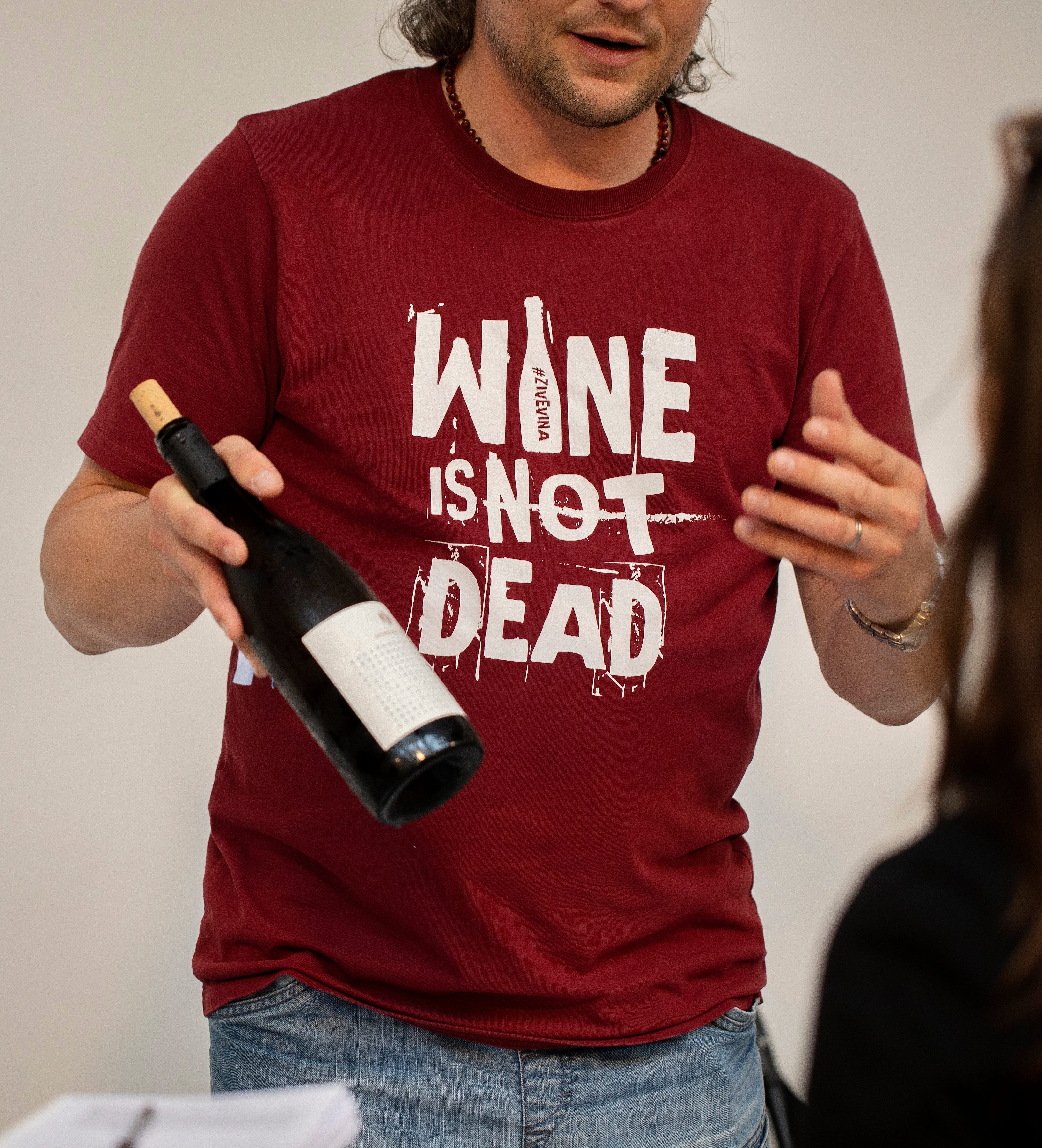
Hallowed be thy trend…
Which brings us with a hip-skip to trends. There is a saying that even a stopped clock tells the right time twice a day. Trends, by definition, are rootless and transient, yet wine commentators are often falling over themselves to identify the latest one. Hence Riesling may be the new Viognier which was the new Sauvignon which was the new Chardonnay. And so the cycle will rinse and repeat. Putting on my pointy star-spangled hat as the prognosticator of all prognosticators, the nostril-damus (sic) of wine magi, the oenomancer extraordinaire reading the future of the wine trade in the coiled sediment of an unfiltered natural wine, I will make the following predictions with absolute confidence… plus ça change, plus c’est la même chose.
Wine trends are 99% PRspiration and 1% winemaking inspiration. It is seemingly more important sometimes that a project succeeds because of blanket social media coverage than because it is inherently interesting. Which posits a Pirandello-esque world of many magazine editors in search of a headline rather than a story. What is more interesting in the real wine world is the interrelatedness of things such as the rhythms of the vineyard, the quality of work done by artisans themselves and the processes of winemaking, rather than this perennial second-guessing about what’s popular (out there), based on a couple of vox pops and some spurious surveys. The medium, however, has definitely become the message. One may even create trends by hijacking social media and effectively networking one’s opinions in such a way that they seem to be freshly-minted truths already acknowledged universally.
Swimming the channels….
Being the novice I was, I was only recently introduced to the expression channel management in a debate involving wine merchants, retailers and suppliers organised by a well-known wine trade magazine. Apparently, it means that wine suppliers should avoid selling the same wines in different outlets (i.e. don’t sell the same wines to indie merchants and to supermarkets), otherwise you get crossed channels and crosser merchants. This channel management can also be done with a remote control although channel managers have to ensure that the left hand is aware of what the right hand is doing. One knock-on effect is the need to create different labels of the same wine for different outlets, for what the eye doesn’t see… the palate doesn’t know to taste! It’s a forgivable deception especially with volume wine, because the label is the thing and more time and more creative effort is spent on the marketing than in ensuring the quality of the product itself. C.M has become a sine qua non since Wine Searcher and price googling in general, which has induced an understandable paranoia amongst retailers who don’t want to be seen to be more expensive than their rivals. For channel management, the words common sense and commercial sensitivity are more than adequate descriptors.
Segmentation. If ever a word deserved solitary confinement in the seventh circle of Hell for violence against the English language it would be this one with its whiffy social science premise of dividing consumers into behavioral subsets of grapefruit pieces.
A spokesperson for Global Brands Incorporated hailed the importance of the results: “If we didn’t find this information out, we’d surely have to invent it. Ultimately, we can envisage a situation wherein there will be as many demographic categories as there are drinkers which will enable us to continue with our “twin track upside down business to business ground control to Major Tom” approach: demythologising wine whilst simultaneously proselytising the consumer to explore the wonderful wide world of our brands or, more simply, recalibrating the brands to fit the customers and recalibrating the customers to fit the brands. And the ultimate objective of all these endeavours? “Upsegmentation of all underindexed drinking categories”. And what is that in real English? “More less choice.” Pinot Grigio for all! —The Alternative Wine Glossary
Gobble this gook
Collaboration: The no. 1 strategy for reaching ‘Bottom of the Pyramid’ customer segments in emerging global markets.
Not a definition the good Dr Johnson would recognise, I warrant.
Target audience…
Consumers, the consumer AKA The herd. We read about consumer choice and the need to appeal to consumers. What is this other than people being treated as statistical variables? The word smacks of crass societal models and operant conditioning.
Needless to say I do not subscribe to this overly simplistic, deterministic view of the world. Vive la difference in wine! Vive la difference in taste! And vive la difference in individuals. Vive real wine intelligence – let’s go beyond the label, and beyond the brand, ignore those surveys that seek to place us in behavioural “segments” and encourage people to think of themselves as more than consumers, but as sentient individuals with valid opinions. An informed buyer is one who has the self-confidence to resist gaudy advertising and histrionic claims and deploys a mixture of curiosity, experience and instinctive judgement in their decision-making.
Female wine drinkers are a race apart as we well know, coming from Venus and partial to a “noice” glass of Pinot Grigio. This patronising approach is also applied to novice wine drinkers for whom no gimmick is considered too crass to entertain their limited interest. The gimmick often takes the form of gateway drinks which by their supremely denatured existence are the very antithesis of wine. To coin a neologism this is the pink moscatofication of wine.
Never judge a label by its wine…
And the Grinch, with his Grinch-feet ice cold in the snow,
stood puzzling and puzzling, how could it be so? It came without ribbons.
It came without tags. It came without packages, boxes or bags.
The eye may be drawn to a label, but when one orders wine in a restaurant or a bar, one often doesn’t see the bottle when its contents are poured into a glass or a carafe. The quality of packaging does not legitimise the wine in any way but if companies spend £££ on developing labels they are bound to believe that it has some impact on the decision of the person buying the wine. Some retailers are overly exercised by the faux-aesthetics of packaging. They tend to believe that people drink with their eyes and will not commit to a wine where the label is mundane.
Novelty is as old as the world itself
The word that buzzes most like a swarm of angry bees in a bonnet is innovation. Novelty, even for its own sake, is deemed a good thing. Many in the wine trade consistently conflate innovation with appearing relevant. An innovative sales strategy or route to market is bound to revolutionize the industry. Hail the advent of AI into every aspect of business, here to save our antiquated souls by depriving us of our souls and ensuring that we all know our rightful place in this world as humble algorithms.